From Subsistence to Entrepreneurship in Angola
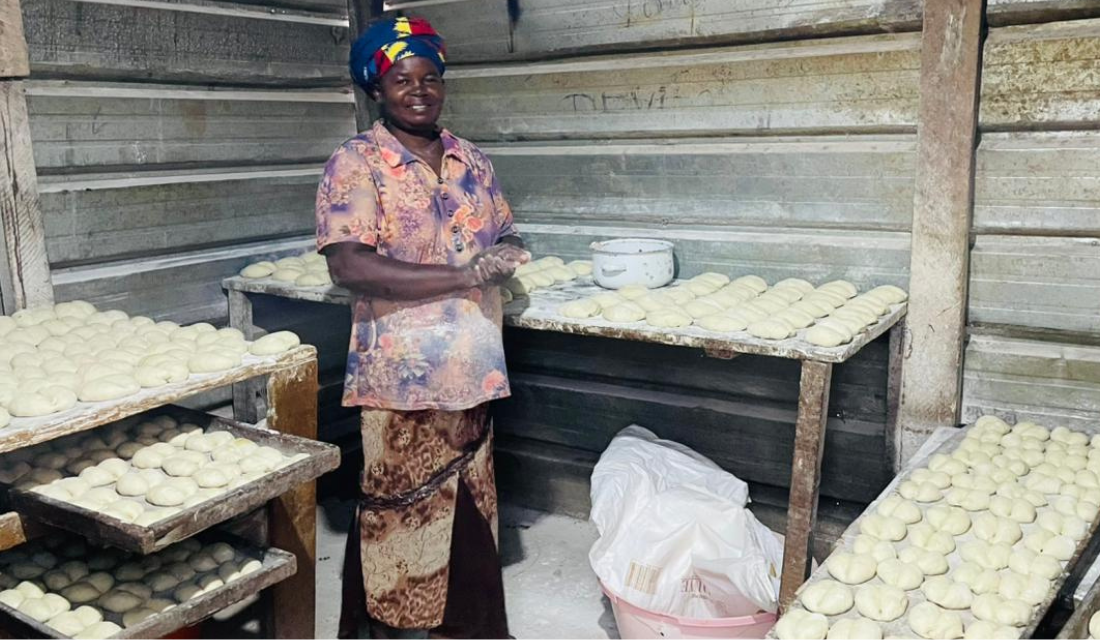
“The savings and loan system has changed our lives,” Elsa said.
In 2023, Elsa—a mother of seven—took a loan from her community’s Savings with Education group. With moral support from her husband, Elsa used the loan—the equivalent of $220 USD—to start an artisanal bakery in her village.
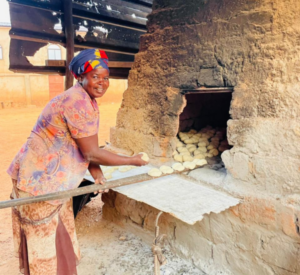
“Before this,” she explained, “we relied on subsistence farming which brought in very little income. Now, both my husband and I dedicate ourselves to the bakery.”
It wasn’t easy to shift from farming to running a full-time business, but the impact has been transformative.
Subsistence farmers like Elsa grow food primarily for the family table. Whatever surplus remains can be sold, but the income this generates often isn’t reliable or sufficient. Elsa reports that her monthly income from baking, even during slow periods, frequently triples what she earned as a farmer.
This steady income enables the family to pay rent and cover daily expenses. Perhaps most important to Elsa, the bakery has proven to be an investment in the future of her children.
“Without that initial loan,” she reflected, “we wouldn’t have what we have today, and we couldn’t have afforded our children’s education.” Proudly, Elsa explained that her youngest four children are thriving in secondary school, while her eldest three—two sons and a daughter–are attending university.
“Invest in entrepreneurship,” Elsa said. “It’s a path to self-employment that can uplift many families, just as it has uplifted mine.”
This International Women’s Day, discover how we implement a community-led approach to reducing violence against women and girls, creating safe and inclusive spaces, and building opportunities for women to lead full lives.